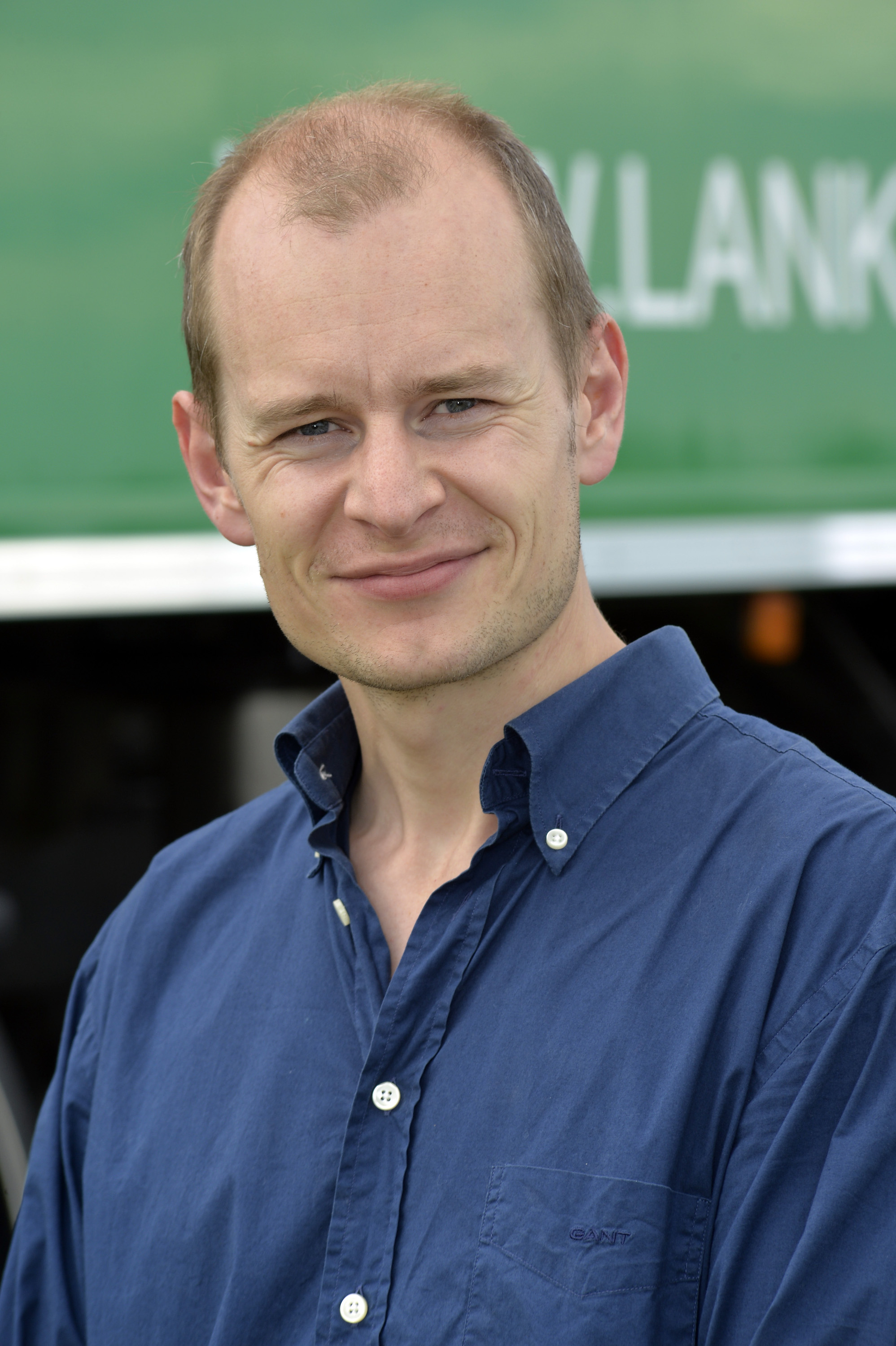
Joe Hobbs, Lankelma Technical Manager, will be speaking at Equipe Group’s Cone Penetration Testing in Geotechnical Practice seminar held at Brunel University on 30th – 31st January 2018. … Continue reading
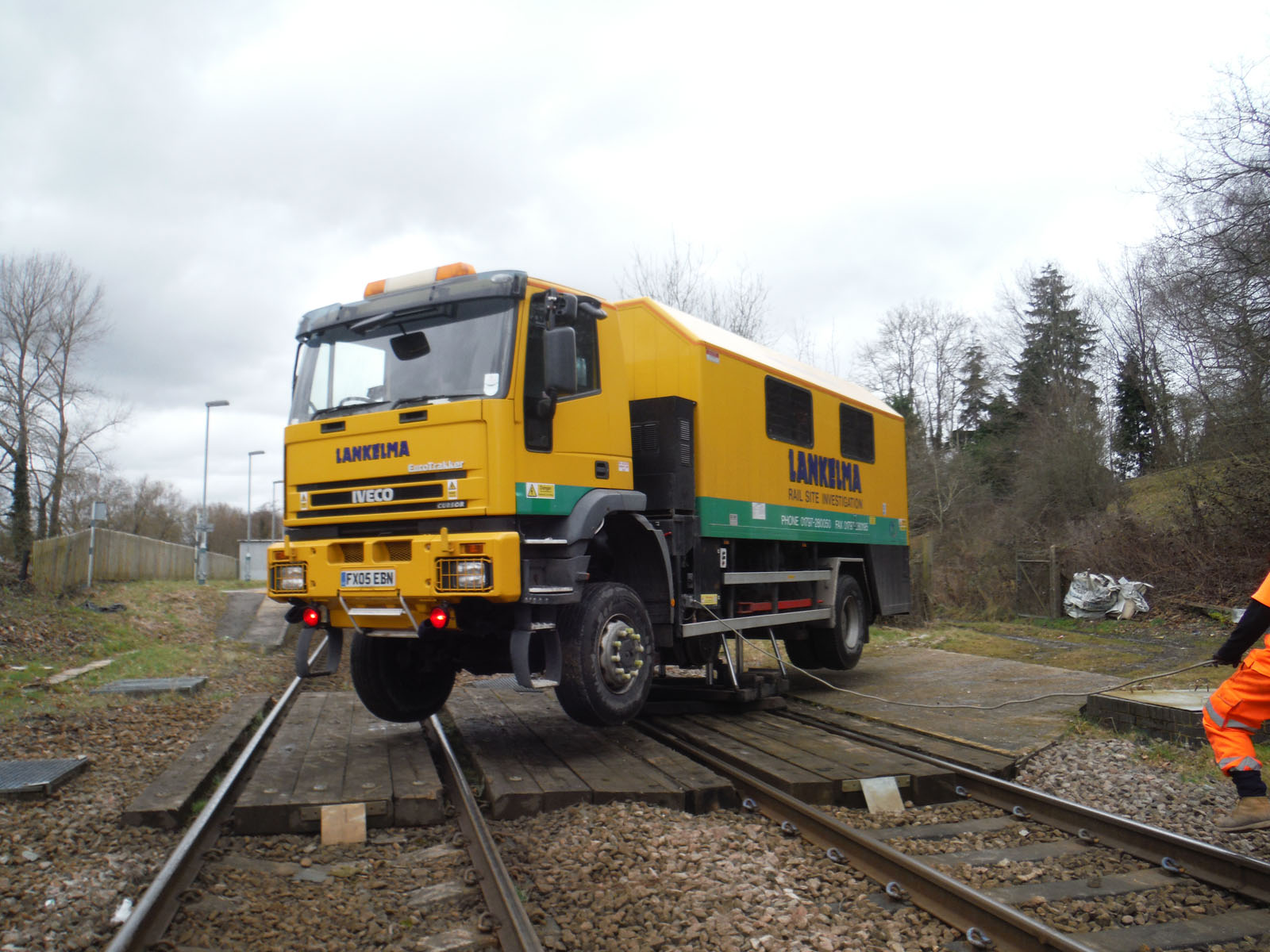
 The new rail facility at our head office is enabling us to further develop our rail-specific CPT rigs and equipment.
“CPT has been used successfully on railway investigations across the UK in recent years,” said Lankelma General Manager Chris Dimelow. “We have developed on-track plant and equipment designed specifically for investigations in the four main rail environments: track bed, embankments, tunnels and stations. This includes our CPT rail truck and our UK14 excavator-mounted unit.
“The facility will enable us to continue this development and also allow us to test and maintain our equipment more easily.”
Lankelma’s CPT rail units can be used with the full range of standard and specialist cones, can take samples and be used to install instrumentation. Provided there is sufficient reaction force and a power supply, CPTs can be carried out almost anywhere in the rail environment.
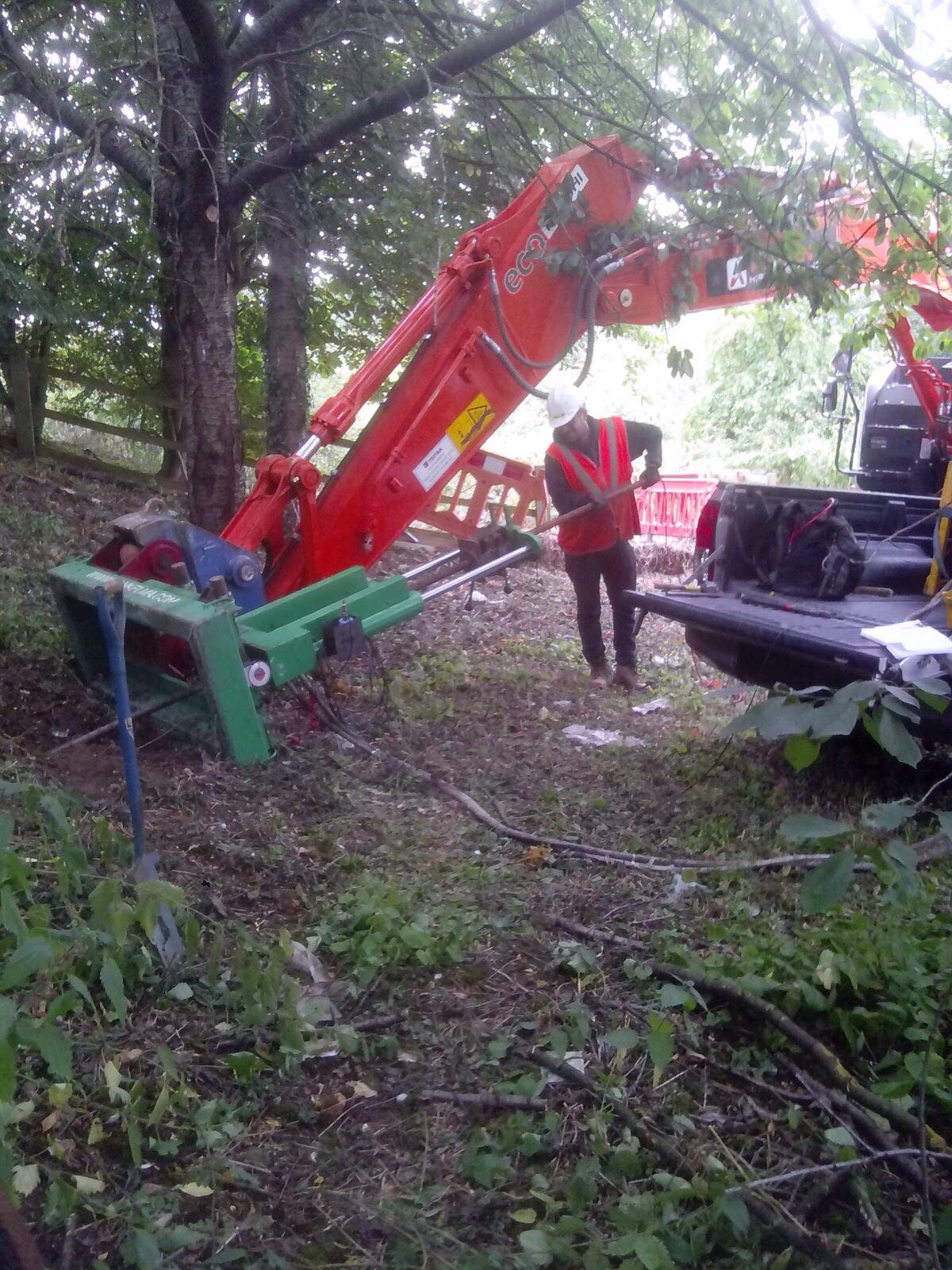
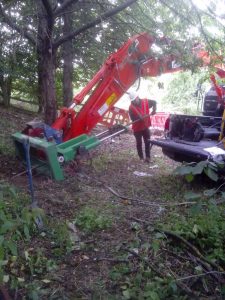 Our highly versatile excavator-mounted inclined rig solved the challenge of testing next to a road in Oxfordshire this summer.
UK21 carried out 35 CPTs, to a maximum depth of 25m, at the proposed locations of drainage culverts for the road, at angles of between 20° and 55°.
“UK21 was originally developed to carry out CPTs through reservoir embankments,” explained Lankelma Technical Manager Joe Hobbs. “However, it has far wider applications, particularly for inclined testing below buried structures, deep or shallow foundations and next to piles, to assess ground conditions and the potential re-use of below ground structures.”
UK21 fits onto the end of most excavator arms and can be tilted to allow CPTs to be carried out at any angle up to 90°.
“The CPT cone has been modified to allow the angle of testing to be monitored throughout the test and provide a repeatable relative stiffness profile,” Joe said. “In many cases, it is also possible to carry out horizontal CPTs along the course of the inclined test so that we can calibrate results to the equivalent vertical test results.”
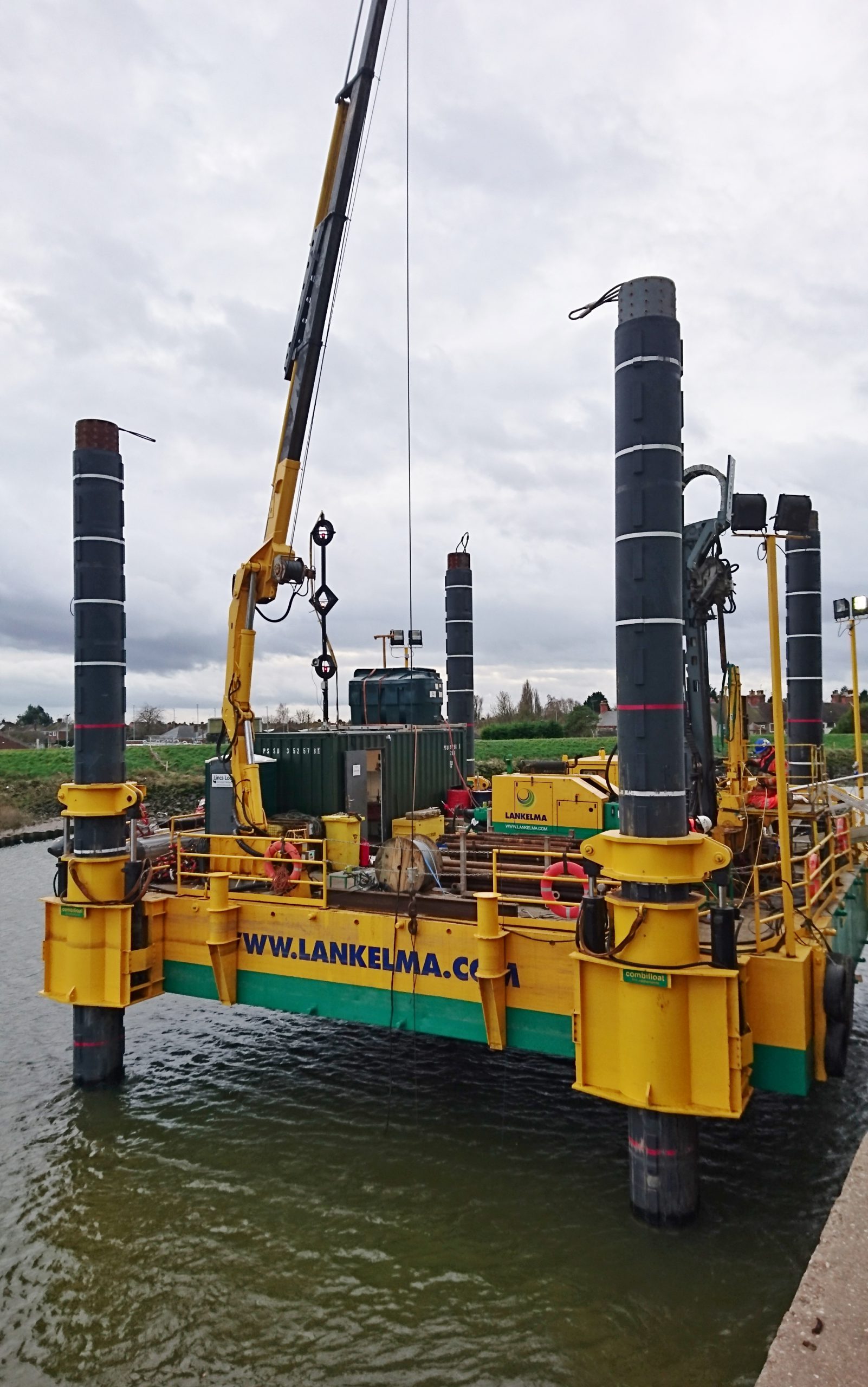
 Our jack-up platform Sandpiper is playing a key role on an investigation for a flood defence scheme in the east of England.
We have been commissioned by the BAM Nuttall and Mott MacDonald joint venture to carry out 13 overwater CPTs from Sandpiper, four of which will include seismic and pressuremeter testing, to target depths of 25m. Onshore testing will be carried out by one of our track-truck CPT rigs at 18 locations, eight of which include seismic and pressuremeter tests, again to target depths of 25m.
“These types of project can be quite complex,” said Lankelma’s Nearshore Manager Carlos Alvarenga. “They require careful planning to coordinate the nearshore and onshore teams, to ensure work is carried out efficiently and safely.”
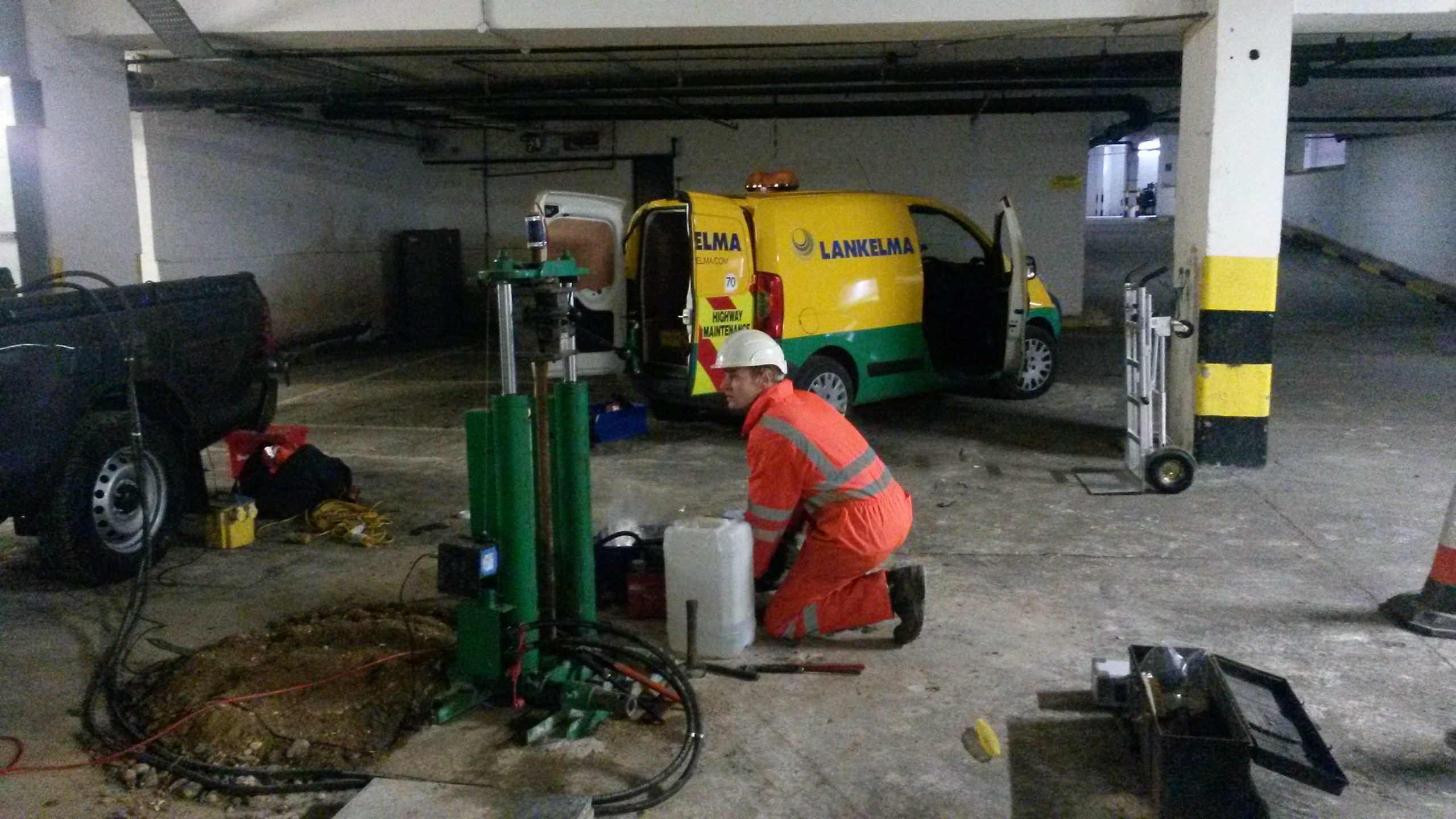
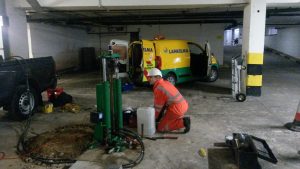 The combination of our lubricating module and CPT rams proved invaluable on a basement car park investigation in central London in October.
We were working for Geotechnical and Environmental Associates (GEA) and carried out a single CPT to 26m, using our lubrication module to help the cone penetrate the underlying London Clay. The team then carried out six pressuremeter tests to 20m the following day.
“The basement rams can be transported on the back of a pick-up, which enabled us to carry out testing in the low headroom car park,” said Lankelma Technical Manager Joe Hobbs, “but it was the lubricating module that really came into its own on this job.”
The lubricating module uses water to form a lubricating layer to reduce the friction between the rods and the ground. The system has proved particularly effective in London Clay, where it has enabled testing to depths of more than 40m. The design of the module means the water is distributed behind the cone and therefore has no effect on cone readings or CPT data quality.
“Typically, maximum penetration depth would be between 18-20m, with a push force of 18t, but using the lubricating module we have reached depths of 30m with just 5t of push force,” Joe said.
Matthew Penfold at GEA added: “The preliminary outputs from the CPTs were extremely useful in providing an indication of the likely depth of the base of the London Clay and the nature of the underlying Lambeth Group, which were used to help guide our subsequent intrusive works.
“Ground conditions were confirmed in a nearby cable percussion borehole, with the base of the London Clay at about 20m and the transition in the Lambeth Group, from upper clay-dominated units into very dense sand, closely matching the observed changes in cone resistance.”
 Projects Engineer Paul Dimelow says asking annoying questions has helped him develop his career with Lankelma.
Paul took up the role of Projects Engineer in September, after two years as a CPT operator.
“I joined Lankelma in 2015, starting out as a trainee. I was a complete geotechnical investigation novice but was soon asking my new colleagues many (probably) annoying questions about what a CPT actually was and how it worked,” Paul said.
“Two years on – and MANY more annoying questions later – I am now working in the Project Management team, ensuring our jobs run as smoothly and successfully as possible. With the ever-growing demand for CPT testing, I am expecting to be kept very busy with many varying and interesting projects for many years to come.”
Paul said he really enjoyed his time as a CPT operator, which saw him work all over the UK – from the Scottish Highlands to central London.
“Every day brought a new experience, meeting different people in many different environments, but now I am looking forward to a more settled but equally-demanding role working at the heart of the Lankelma family.”
Hopefully Paul’s fellow office workers will be as willing as our CPT operators to answer all of his questions – it certainly seems to have been a good career development strategy!
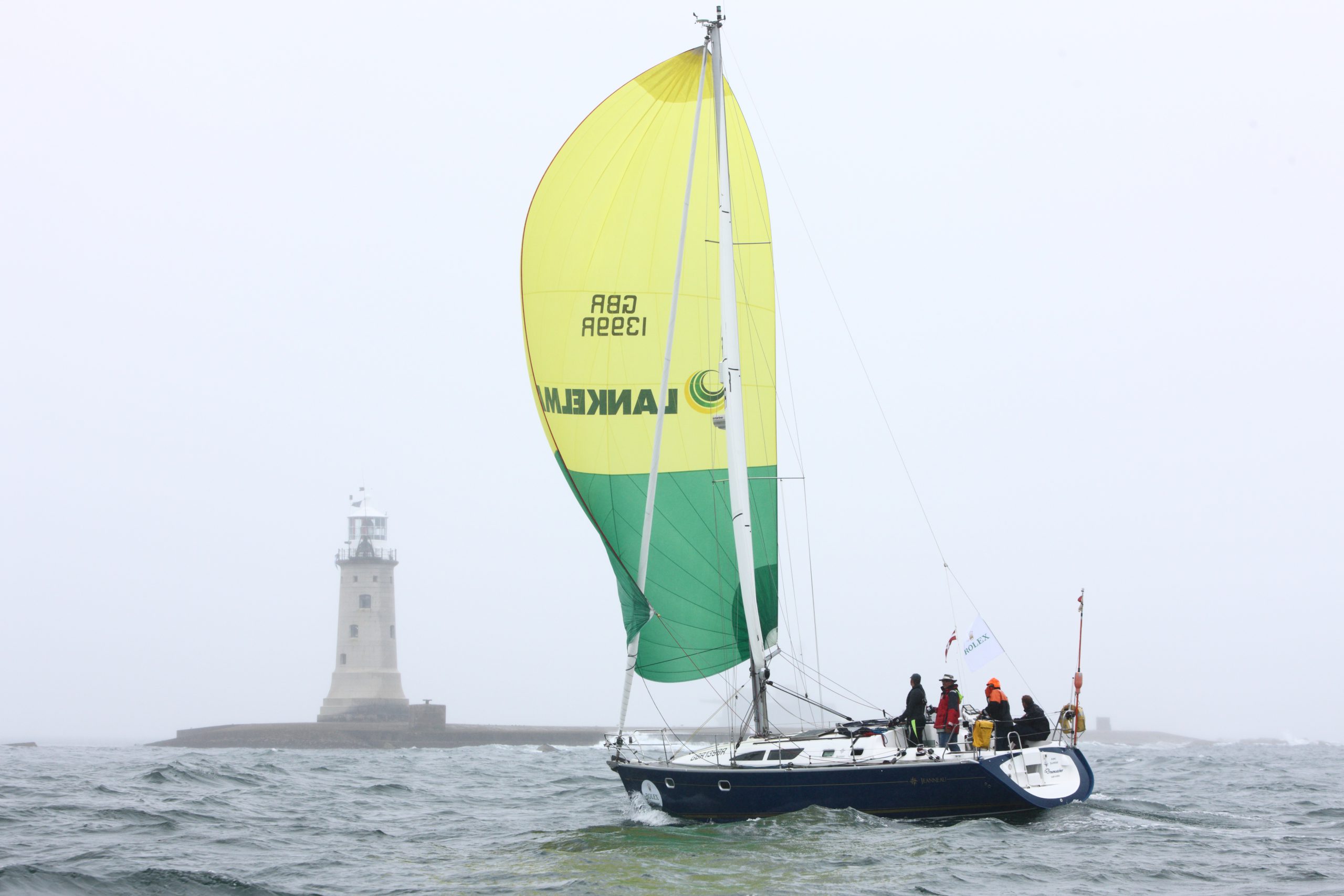
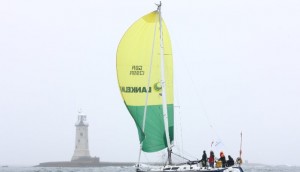 Lankelma will go on as an independent company after the takeover of the Gardline group by Boskalis, of which Lankelma is not part. We will be very happy to support the new Gardline/Boskalis group for any on land or nearshore operations and we wish them every success.
Lankelma will be building on its position as the foremost in situ testing specialist in the UK with over 20 CPT units for greenfield, brownfield, rail and overwater projects as well as international nearshore marine geotechnical projects. Lankelma will utilise its own jack up platform Sandpiper and we are looking forward to be working for our existing and new clients.
Lankelma MD Eric Zon has over the years had several positons in the Gardline group as MD of Gardline Geosciences Ltd and BD Director for the Gardline group. He has retired from all his Gardline positions and will fully concentrate on Lankelma.
Lankelma now works once again as an independent company but next to its prominent position in the on land industry now also with a wealth of marine experience.
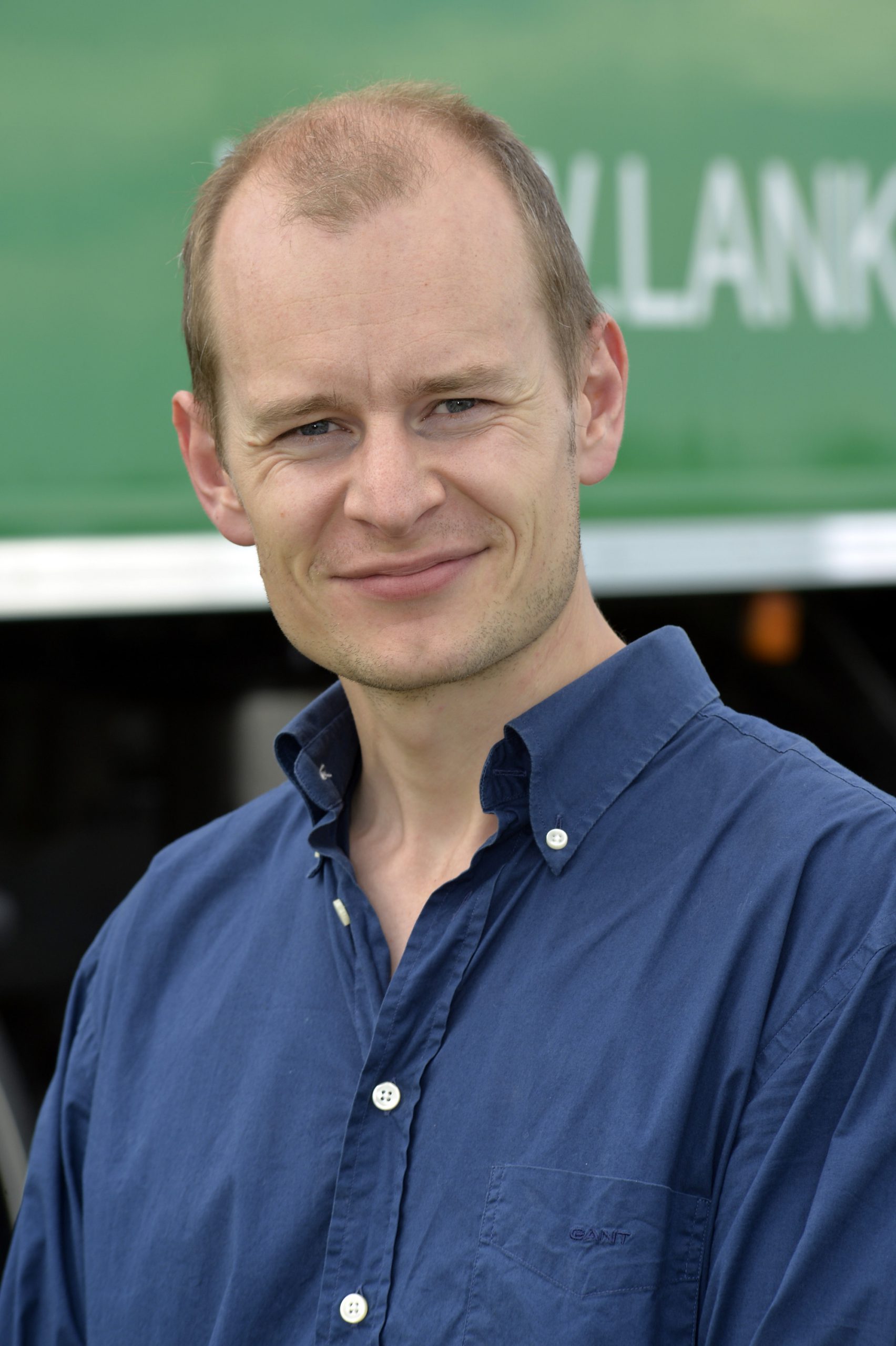
 Technical Manager Joe Hobbs oversees the technical aspects of all our testing, sampling and reporting, ensuring our work is of the highest quality. … Continue reading
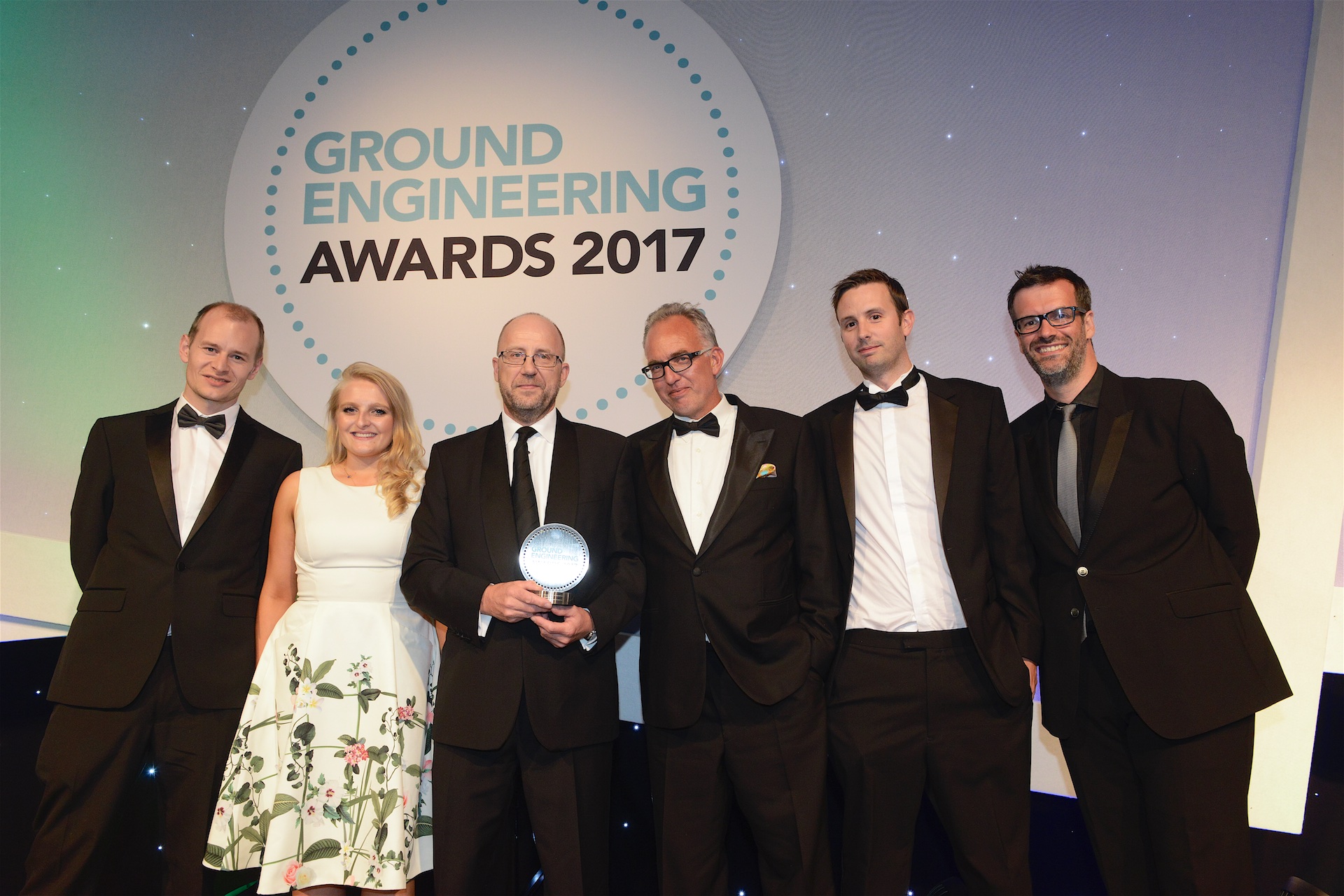
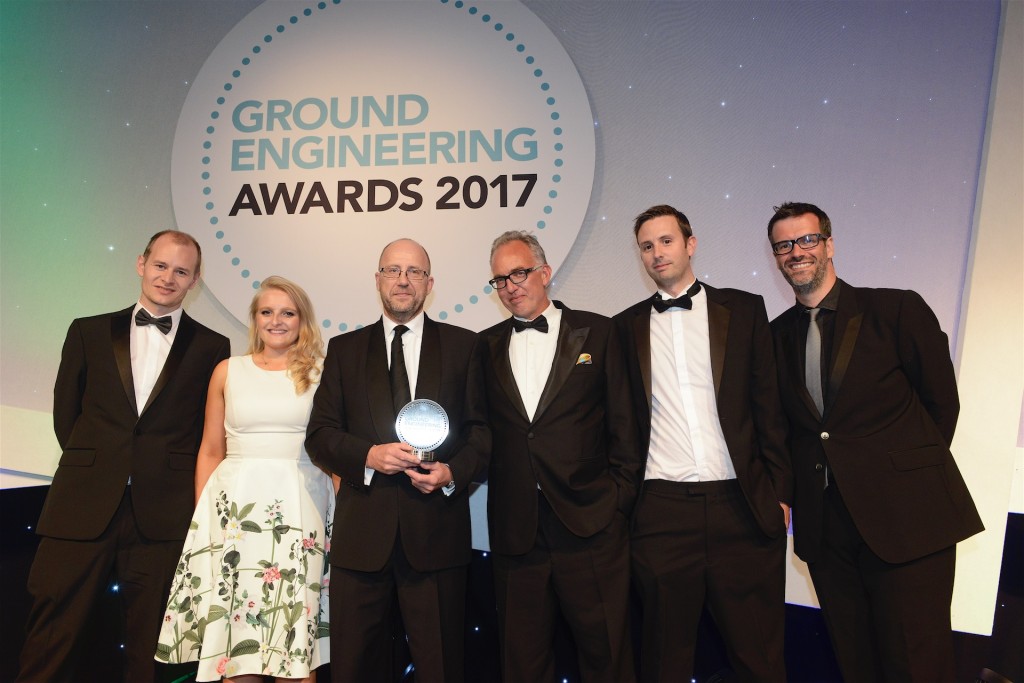 Lankelma won the Equipment Innovation
 category at this year’s Ground Engineering Awards, recognising its work in developing better ways to gather high quality geotechnical data from Cone Penetration Testing for engineering design. … Continue reading